Original Burial Site of Saint Nick May Have Been Found!
After years of excavation, the leader of an archeological expedition at the Church of St. Nicholas in Demre, Turkey, announced this week that her team has found a sarcophagus that may contain the body of St. Nick — a discovery that could muddy the conventional wisdom about the true resting place of the saint’s relics, which is currently believed to be Italy. In a recent interview, the leader of the expedition, Professor Ebru Fatma Fındık, said that sources point to Turkey’s southern Antalya Province as Nicholas’ resting place after his death, which took place in the 340s.
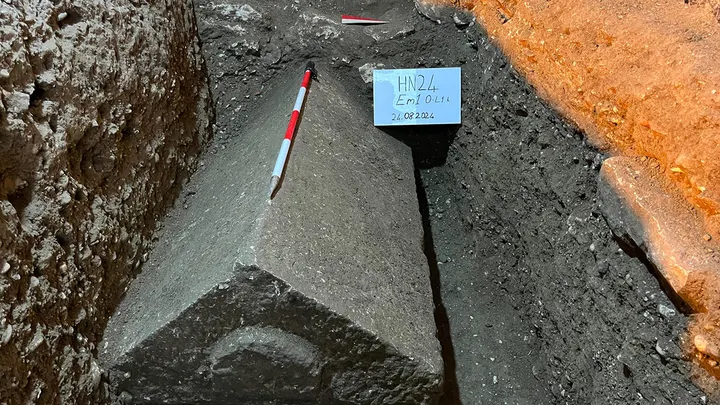
“We have been carrying out excavations in the church for months … During our drilling work in the two-story building that borders the courtyard of the church from the south, we came across a sarcophagus” that they believe belongs to St. Nicholas, Fındık said. The sarcophagus, found within the church’s two-story annex, is believed to be the original burial site of Saint Nicholas, who lived in the ancient city of Myra during the 4th century CE. During an excavation in Turkey, a sarcophagus was discovered that is believed to be the burial site of Saint Nicholas. Photo: (Ministry of Culture and Tourism of the Republic of Turkey)
Measuring approximately two meters in length and buried at a depth of 1.5 to 2 meters, the sarcophagus features a raised lid and a pitched roof consistent with burial styles of the region. Its proximity to the church—constructed in the 5th century CE by order of Byzantine Emperor Theodosius II—adds credibility to the theory that this may have been the saint’s original resting place.
Some of St. Nick’s Remains May Have Been Moved to Italy – Bari, and Venice
Saint Nicholas, known for his acts of generosity and miraculous intercessions, served as the Bishop of Myra and died in 343 CE. Centuries after his death, his remains were moved to the Church of St. Nicholas, which was built over his original burial site. By the 11th century, his bones were reportedly taken to the Basilica di San Nicola in Bari, Italy, and later, additional remains were transported to Venice during the First Crusade. In 1953, scientific studies confirmed that bones from both Bari and Venice belonged to the same individual, though whether they were Saint Nicholas himself remains inconclusive.
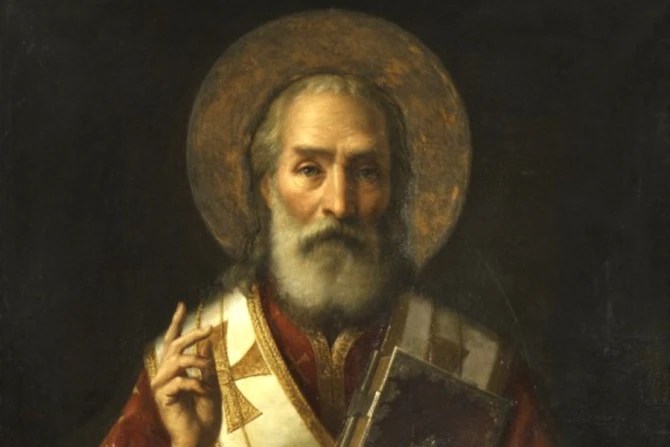
Painting of St. Nicholas, by Jaroslav Čermák (1831-1878). | Credit: Galerie Art Praha via Wikimedia (public domain)
Saint Nickolas -Stories of the Original “Santa Claus” of Compassion
Saint Nicholas, known for his acts of generosity, was born in the third century Greek village of Patara, which is now on the southern coast of Turkey. It is said his wealthy parents died when he was young and that he used his inheritance to assist the needy and suffering, especially children. Nickolas served as the bishop of Myra, and died in 343 CE.
There are many stories about Saint Nicholas. They are stories of love and compassion. They are stories of self-sacrifice and great generosity. One of these stories tells about a widowed man with three daughters. He was old and poor. Having no money for dowries, upon his death, his daughters would most likely be sold into slavery or prostitution. One night while everybody was sleeping, Nicholas rode past the family’s home and flung a red velvet bag filled with gold coins in through the window of the old man’s home. The father heard the noise and saw Nicholas riding off, and he spent the rest of his life praising God for sending Nicholas to them.
How Was Saint Nickolas Transformed into Today’s Santa Claus?
Over the centuries, the real Saint Nicholas was gradually transformed into what children know today as “Santa Claus”. How exactly did this happen? First of all, since his passing, Christian families had celebrated the feast day of St. Nickolas. When settlers began immigrating to America, dutch families brought the tradition of celebrating Saint Nicholas’s feast day to New Amsterdam (present-day New York City) in the 17th century. The Dutch called him “Sinterklaas”, which eventually became the English “Santa Claus”.
The legend of Santa Claus was formed by combining the stories of St. Nickolas’s generosity and the image of Saint Nicholas with old Nordic folktales about a magician who rewarded good children and punished naughty ones. Santa’s red suit and related apparel are thought to have been invented by modern-day marketing departments as the legend spread through Europe and America. Why the North Pole? It is believed that this site was chosen as Santa’s home because of the Arctic’s mythical status in the 1840s and 50s, the reindeer that live there, and because it snows all year.
The Spirit of Saint Nicolas Lives On through Love and Generosity
As we all know, the image of Santa Claus has been maintained and reinforced through song, radio, television, children’s books, family Christmas traditions, films, and advertising. And of course he helps sell a lot of merchandise. Bottom line however, Santa Claus had his roots in the real Saint Nicholas – a 4th-century Christian bishop known for his generosity and secret gift-giving. He was and is the patron saint of children.
Sources:
CNA full article: https://www.catholicnewsagency.com/news/261091/santa-s-tomb-coffin-of-st-nicholas-may-have-been-found-but-there-s-a-catch
Archeology News: Dec 7, 2024 – https://archaeologymag.com/2024/12/sarcophagus-of-santa-claus-found-in-turkey/
The Dynamic Catholic – “All About Saint Nickolas” – https://www.dynamiccatholic.com/advent/about-st-nicholas.html?gad_source=1&gclid=CjwKCAiApY-7BhBjEiwAQMrrEYfE1ZInMmM71iZVlyUSRZIcbzqqgYRklqeGsZZgtUgIkO9ZoouhCxoCIZcQAvD_BwE
 Evidence To Believe