From Anugrah Kumar, Christian Post Contributor Monday, October 07, 2024
Summary of Findings Concerning Bloodstains on Shroud of Turin
A scientist in Italy has provided new research suggesting the bloodstains found on the Shroud of Turin — a linen cloth that many believe was Jesus Christ’s burial garment — are consistent with the types of torture faced by Jesus as described in biblical accounts. A study by Professor Giulio Fanti from the University of Padua finds a pattern of bloodstains that align with historical descriptions of the crucifixion.
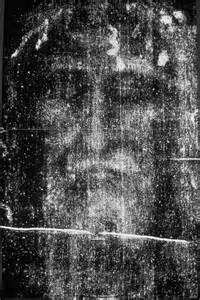
Hundreds of Bloodstains on the Shroud
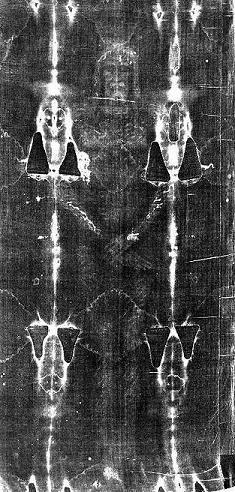
“There are hundreds of reddish spots of varying shapes and sizes from centimeters to a few decimeters, which almost completely overlap the body image imprinted on it and which seem perfectly consistent with the different types of torture suffered by Jesus, who was wrapped in it as a corpse,” Fanti wrote.
“Numerous bloodstains [1-5] scattered throughout the double body image of the HST show evidence that Jesus of the HST was tortured [15]: bloodstained marks all over the body image which are consistent with pre-crucifixion flagellation, bloodstained marks on the head that are consistent with a ‘crown’ of thorns, blood marks on the hand and feet that are consistent with crucifixion and the bloodstain on the chest that evidences a post-mortem wound that corresponds with the post-mortem spear wound that Christ received as is described in the Bible,” the study adds.
Medieval Age of the Shroud Due to Contamination and Flawed Methods
For many years, the shroud’s age has been debated, especially following a 1988 study that dated it between 1260 and 1390 A.D. De Caro’s team proposes that earlier results questioning the age authenticity were likely skewed by contamination from numerous factors, including repairs and environmental exposure over the centuries. The degree of cellulose aging in the linen analyzed is consistent with other first-century materials, De Caro told The Telegraph.
More Evidence the Shroud of Turin Dates to the 1st Century
The Consiglio Nazionale delle Ricerche, or National Research Council of Italy, in Bari, published findings in 2022 where a tiny sample from the shroud underwent a novel dating method called Wide-Angle X-ray Scattering. The team, led by Professor Liberato De Caro, analyzed the structural degradation of linen fibers from the shroud securely stored at the Cathedral of San Giovanni Battista in Turin. Their findings indicate that the material could be 2,000 years old, aligning with the first century A.D., the time of Jesus.
What Caused the Image on the Shroud of Turin?
Bill Lauto, an environmental scientist in Long Island, has also pointed out that the characteristics of the shroud’s image suggest a burst of radiant energy, a phenomenon that medieval technology could not reproduce, according to The Tablet. Lauto argues that this supports the notion of the shroud being created in a moment akin to what is described in the Gospels as the resurrection of Jesus.
These latest findings challenge the previously accepted view that the Shroud of Turin was a medieval creation.
>> For more info, see the Christian Post article: https://www.christianpost.com/news/shroud-of-turin-stains-consistent-with-christs-torture-study.html?utm_source=Daily&utm_campaign=Daily&utm_medium=newsletter
 Evidence To Believe